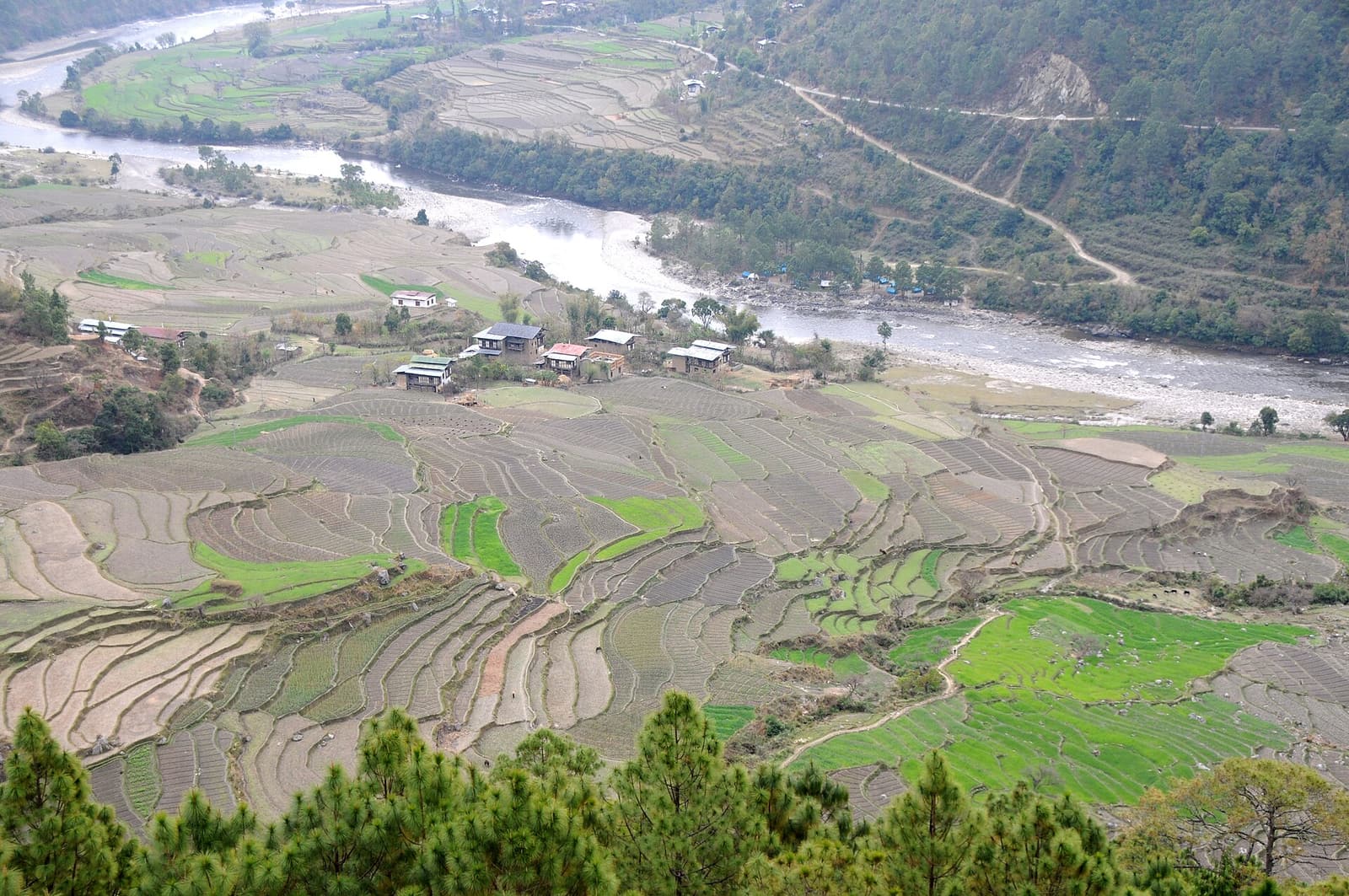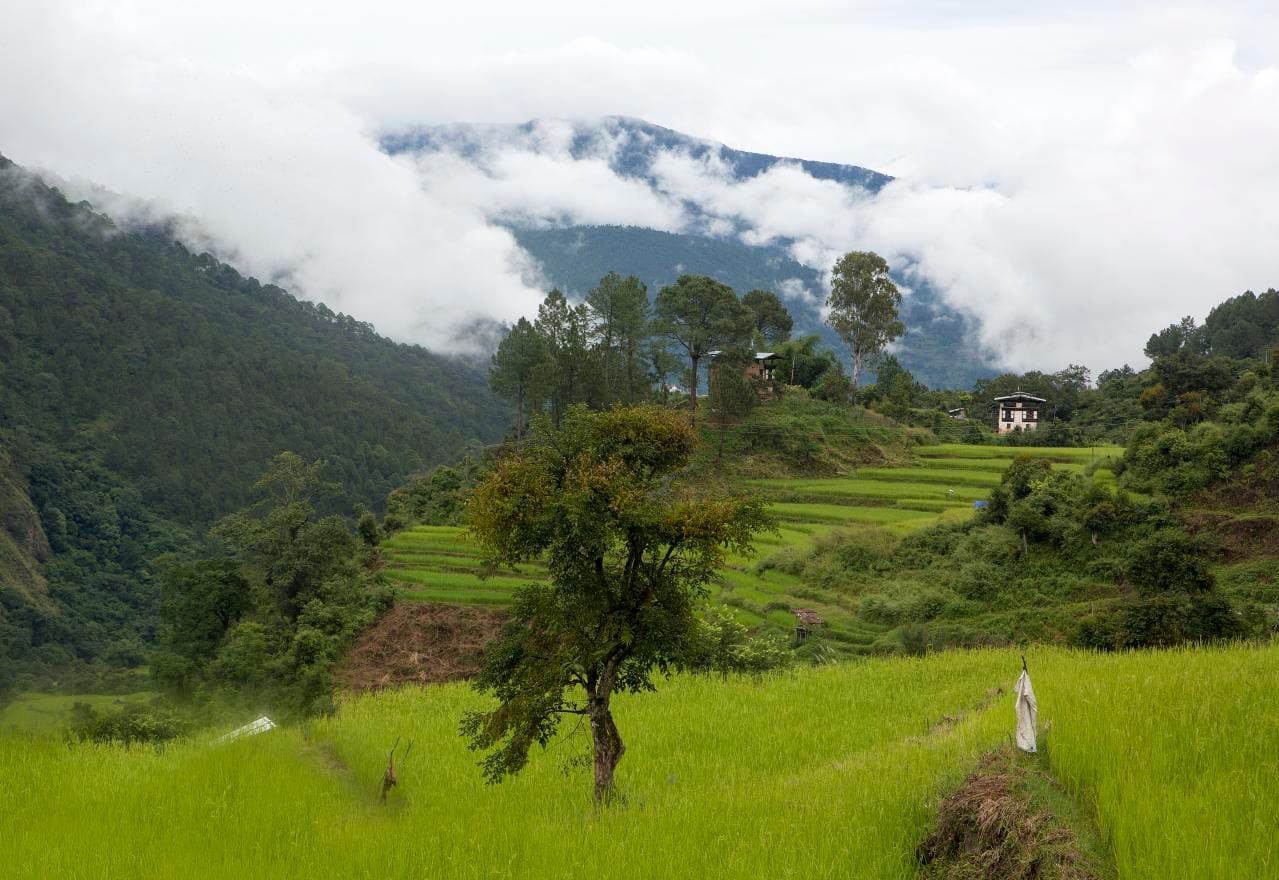
In most years the best months are March to May and late September to November. Punakha’s low altitude also makes it pleasant in winter, when higher valleys are cold.
| Season | Weather | Why go |
|---|---|---|
| Spring (Mar–May) | Warm and generally clear | Jacaranda blossom, festivals |
| Summer (Jun–Aug) | Hot, humid, monsoon rain | Green fields, fewer visitors |
| Autumn (Sep–Nov) | Clear and comfortable | Rice harvest, clear mountain views |
| Winter (Dec–Feb) | Mild days, cool nights | Quiet valley, cranes in Phobjikha |
Festivals
The Punakha Drubchen, with its re-enactment of a historic battle, and the Punakha Tshechu are usually held around February or March. Dates follow the lunar calendar, so check each year and book early. The Black-Necked Crane Festival takes place at Gangtey Monastery in November.
Rice seasons
Terraces are generally green in summer and gold near harvest in early autumn. Timing varies with altitude and year.
A note on cost
Peak months often mean higher hotel rates and fuller flights. See where to stay for booking advice.